
Investing in wine
Like investing in fine art or antique cars, wine investments centre on the acquisition of a tangible asset whose value is expected to appreciate over time.
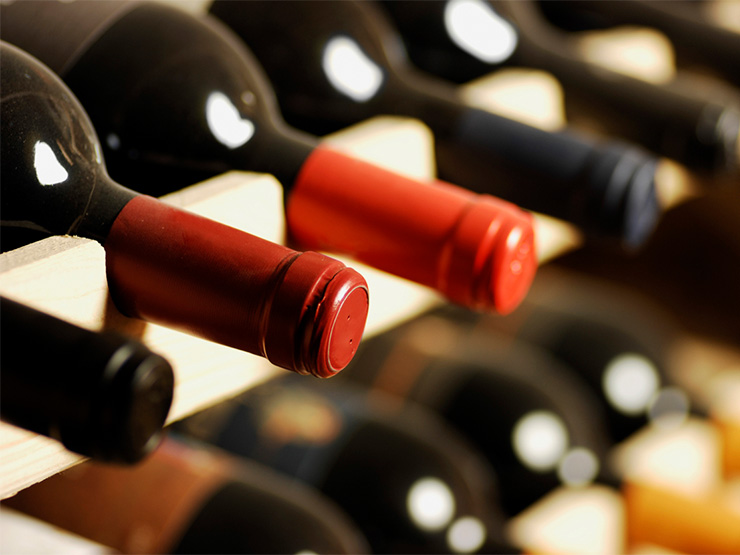
In this case, you’re purchasing and storing bottles of wine, in anticipation of selling them at a higher price point later. According to James Miles, Director of the London International Vintners Exchange (Liv-ex), fine wine is no investment cure-all. “Fine-wine investors should never lose sight of the fact that somebody has to drink the wine if current prices are to be justified,” says Miles. “Moreover, one shouldn’t discount the storage and opportunity costs of holding a commodity that generates no income.”
Investment drivers
Investment savvy is critical in this market. As a consumable, improving asset, fine wine is driven by a unique supply/demand environment. There is only a finite amount of each vintage produced, which causes a spike in demand. As the wine matures and more bottles are opened for consumption, the scarcity factor leads to increased desirability, improved value and higher prices. The opinion of influential wine critics is another key factor impacting demand and price.
Some of the world’s most sought-after wines come with a hefty price tag, ranging from thousands to tens of thousands of rands per bottle. The consistently best-performing investment-grade wines are the top-quality ‘first growths’ from the Bordeaux region in France (based on a classification system dating back to 1855), with labels from Burgundy, Champagne and the Rhône also yielding good returns.
General investment advice is to rather buy a small quantity of the best wine one can afford, than a greater quantity of a lesser-quality wine that may not fit the supply/demand profile needed to grow as an investment. Wines bought en primeur (two to three years before being bottled and released onto the open market) are also generally the more cost-effective purchasing option.
Rise of South African wines
Wine Cellar Director, Roland Peens, says that South African fine wine is gaining momentum as an alternative investment class. Intrinsic wine quality is at an all-time high as we enter a new era of industry-wide, quality-focused winemaking. Smaller producers and larger historical properties are harnessing young and old vines with a deeper understanding than ever before.
It seems that the 2015 vintage has been a tipping point for local and international consumers as far is South African wines are concerned. “Accepted as the greatest modern-day vintage, 2015 produced balanced, structured and poised wines in Stellenbosch and across the Cape,” says Peens.
With high inflation and a weak Rand, producer inflation is currently higher than consumer inflation and therefore the value of South African wines is being positively repositioned in the market. Under these circumstances and adding to this the appreciation of older vintages, the Wine Cellar team of wine judges believes that annual long-term returns of 10-20% are achievable.
Peens says there are a growing number of SA wines that fits the investment criteria. The wineries on this prestigious list range from traditional names to rising stars and include Kanonkop, Tokara, Rust en Vrede, and Reyneke from Stellenbosch, as well as Mullineux, Porseleinberg, and the Sadie family from the Swartland.
Peens’ other go-tos are Boekenhoutskloof’s Syrah and straw wines; Klein Constantia’s famous dessert wine, Vin de Constance; Alheit Vineyards Cartology; and younger winemakers showing potential such as Lukas van Loggerenberg, Duncan Savage and Donavan Rall.
Use credible brokers
For investors not familiar with the complexities of the fine-wine market, investing through a reputable merchant is advisable. Access to appropriate storage facilities is another important requirement, as wine stored incorrectly declines in value.
Wade Bales, owner of the Wade Bales Wine Society, classes fine wine as a medium- to long-term investment that should ideally be left to mature in value for between five to ten years. His advice is to buy a minimum of 12 bottles of a wine when investing, as potential buyers often require at least a dozen bottles.
Helpful websites to browse for more fine-wine investment advice include www.winecellar.co.za, www.liv-ex.com, www.wineinvestment.com, www.wine-searcher.com and www.decanter.com.
The information contained on this website (or in this article) is of a general nature and intended for information purposes only. It is neither to be construed as financial advice nor to be regarded as a definitive analysis of any financial, legal or other issue. Individuals must not rely on this information to make a financial or investment decision. Before making any decision, we recommend you consult your financial planner/advisor to take into account your particular investment objectives, financial situation and individual needs.