
Why you should be saving in a foreign currency
The fluctuations in the value of the rand in relation to other currencies can impact the economy and influence the value of your investments.
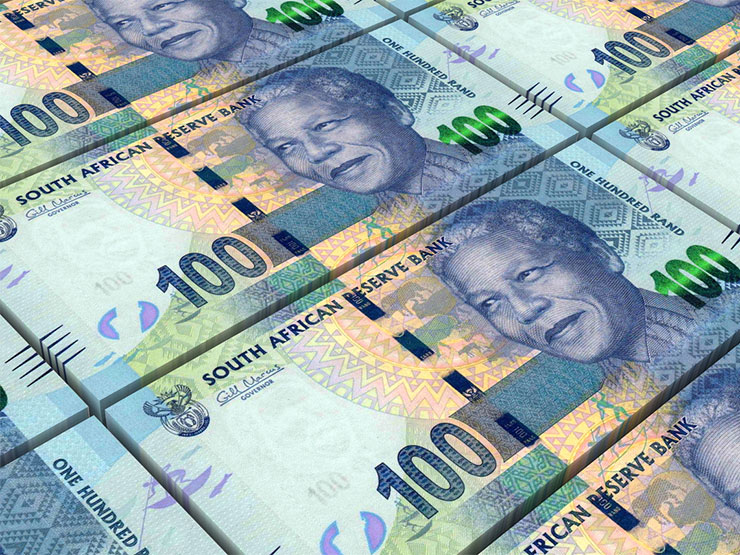
The volatility of the rand was starkly illustrated in April when the currency weakened by more than 6% against the dollar in the space of a week. The crisis at state power utility Eskom, which led to a renewed bout of loadshedding, as well as the floods in KwaZulu-Natal that caused at least R10 billion of infrastructure damage, have reminded investors that Africa’s most industrialised economy faces significant deficiencies.
What is the effect of currency fluctuation?
While the impact of a currency’s fluctuations on an economy is extensive, most people do not pay close attention to exchange rates because most of their business is conducted in their domestic currency. For the typical consumer, exchange rates only come into focus for occasional activities or transactions, such as foreign travel or import payments.
Currency fluctuations do, however, have a significant impact on consumers, as a weakening currency increases the cost of imports as well as the cost of overseas travel, as it decreases the buying power of your money. Allocating some of your savings to offshore investments can help protect your assets against the effects of a weakening rand.
What determines currency movements?
Factors that determine currency movements include the following:
- The trade balance (difference between a country’s imports and exports): When imports exceed exports, it is called a trade deficit. When the opposite happens, it is known as a trade surplus. The trade balance indicates the strength of a country’s economy in relation to that of other countries.
- The political climate of a country: Political stability is very important, especially in an emerging economy like ours. Developed economies can however also be influenced by political uncertainty, as historically illustrated by the impact of Brexit on the value of the pound.
- Interest rate differentials: Interest rate differentials (IRDs) simply measure the difference between interest rates of two different instruments. IRD plays a key role in calculating a currency carry trade (carry trades often consist of borrowing in a low-interest rate currency, and then converting the borrowed amount into another currency with a higher yield).
- Inflation: High inflation has an eroding effect on the value of a currency, which is one of the reasons why the US dollar is stronger than the rand.
Why do some currencies fluctuate while others do not?
The majority of countries have no exchange control regulations, which is why their currencies fluctuate in relation to the dollar. Countries like South Africa operate a flexible exchange rate system, which means the value of the rand is determined by the market forces of supply and demand. The demand for a currency relative to the supply will determine its value in relation to another currency.
Certain countries, like the United Arab Emirates (UAE), have fixed exchange rates. The UAE dirham is fixed to the dollar. Such countries have very stable and predictable economies.
What does saving in a foreign currency offer?
Allocating some of your savings to offshore investments can help protect your assets and wealth against the effects of currency depreciation. International savings gives you the chance to insulate yourself from some of the impacts of currency fluctuations, especially those who travel or send money to family overseas.
It can be difficult for South Africans to open a bank account in a foreign country. An easier and more cost-efficient option is to open a foreign currency bank account with a South African bank. Investors can use a foreign currency investment account to quickly, easily and conveniently switch their savings to a foreign currency. These types of accounts provide access to many different currencies, including the dollar, pound and euro.
With a foreign currency investment account, you can invest in foreign exchange with ease and in many cases there is no minimum amount, as long as the small money transfer fee is covered. An investment in a foreign currency account is an easy way to start diversifying your investment portfolio by including offshore assets.
SARS and SARB regulations
The SA Reserve Bank allows any adult in South Africa R1 million to be invested or spent in offshore currency each year, without the need to provide additional documents. You do need a tax clearance certificate from SARS to take advantage of the foreign investment allowance that allows you to invest up to R10 million per calendar year.
The information contained in this article is of a general nature and intended for information purposes only. It is neither to be construed as financial advice nor to be regarded as a definitive analysis of any financial, legal or other issue. Individuals must not rely on this information to make a financial or investment decision. Before making any decision, we recommend you consult your financial planner/adviser to take into account your particular investment objectives, financial situation and individual needs.
© Concept Publishing CC 2022