
The growth of solar power
With experts hailing it as ‘the start of a new era,’ solar power has been the fastest-growing source of new energy worldwide in recent years, surpassing the growth in all other forms of electricity-generation.
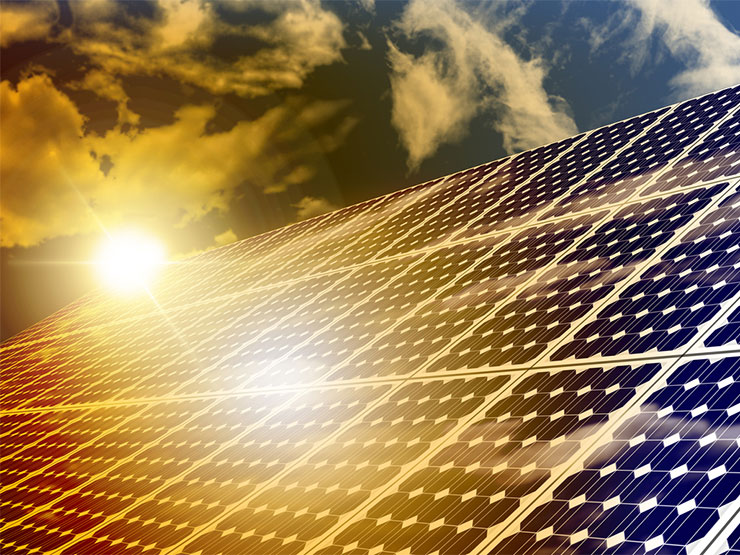
The International Energy Agency (IEA) predicts that renewable energy capacity will expand by 43% by 2022, adding that solar power will continue to dominate the renewables market in the foreseeable future. The IEA monitors off-grid solar applications across developing nations in Asia and sub-Saharan Africa. Over the next number of years, the IEA expects off-grid energy in these regions to triple from their current levels.
According to the World Economic Forum, much of this growth will come from industrial applications, mini-grids, and solar home systems (SHS), driven by government electrification programmes and private sector investments. For example, such is the growth across the SHS market, the technology is forecast to bring basic electricity services to almost 70 million more people in Asia and sub-Saharan Africa by 2022.
The consensus amongst local industry experts is that the main reason homeowners are installing energy-efficient and environmentally friendly power back-up, photovoltaic (PV) power-generating systems and solar thermal geysers is to reduce their electricity costs. The recent bout of load shedding has however also showed consumers once again how fragile our national electricity grid can be.
In general, appliances that drive heating, cooling or pumping are the main consumers of electricity. These include geysers, heaters, air conditioners, ovens and stoves and swimming pool pumps.
If you want to go off the grid completely and source your electricity solely from solar power, you could expect an outlay of about R200 000 for an average four-person home using 25kWh/day. For a five-person home using more than 35kWh/day the total costs comes to approximately R350 000.
Studies by solar technology providers show that the optimal solution is to generate 40% to 50% of a household’s power needs from solar panels and batteries, and to draw the balance from a municipality or Eskom in a controlled way. Using smart load management, a household can spread its energy use throughout the day to make the best use of its solar installation.
Components of a solar power system typically include solar panels, batteries or energy storage systems and an inverter. A solar panel and battery installation, combined with energy-saving technologies such as heat pumps, can cut electricity costs in half, paying for itself three or four times over. These systems can be leased or bought with a multi-year finance package to minimise upfront costs.
Solar panels need to be replaced every 25 to 40 years while Lithium batteries need replacing every 8 to 10 years. Typical solar batteries like lead, calcium or other AGM batteries require replacing every 3 to 5 years.
Batteries produce output power in direct current (DC) form, which cannot be used to run most household appliances, as they require alternating current (AC) power. For this reason, a solar power installation includes an inverter, which converts DC power to AC power. The average lifespan of an inverter is between 10 and 15 years.
The information contained on this website (or in this article) is of a general nature and intended for information purposes only.