
The grass is always greener
A luscious green lawn is the cornerstone of a beautiful garden – follow these guidelines in order to keep it as such.
Watering
- Water in the morning as evening watering can lead to diseases and frost damage.
- Most lawns need at least one decent soaking per week.
- Make sure water gets down to the roots during the growth seasons.
- Lawns in sandy soil may need to be watered every second day.
- Surface watering in the morning keeps frost at bay in winter and cools grass down in summer.
Mowing
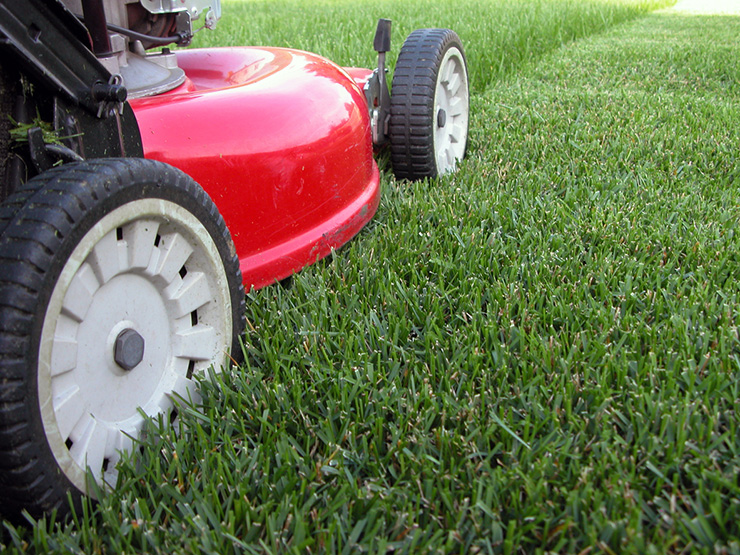
- During the growth season a lawn should be mowed at least once a week.
- Never cut grass to root level, and do not remove more that 30 – 40% of the plant tissue.
- Alternate the direction of cutting between sessions.
- Never cut wet grass.
- Rather mow towards evening to prevent sun damage.
- If your lawn starts feeling thick and spongy it is time for “scarifying” – the removal of thatch and moss from the base of the plant by a professional.
- Leaving a covering of grass clippings on your lawn can lower your dependence on fertilizers.
Feeding
- Fertilize your lawn once a month during summer.
- Granular general purpose fertilizers such as 2.3.2 or 3.2.1 SR (slow release) are best.
- Strong-growing lawns may be fed with straight nitrogen fertilizers such as ammonium sulphate or LAN from middle to late summer.
- Water well after fertilizing.
Weeds, pests and diseases
- Using garden contractors may increase the chances of infestations.
- The majority of lawn weeds can be removed by hand, or killed using weed killers.
- Most insects can be killed by pesticides however the treatment of mole crickets and termites should be performed by a professional.
The information contained in this article is of a general nature and intended for information purposes only.
© Concept Publishing CC 2022