
The current state of self-driving cars
The concept of vehicles that can operate without human intervention has transitioned from a futuristic fantasy to a tangible reality.
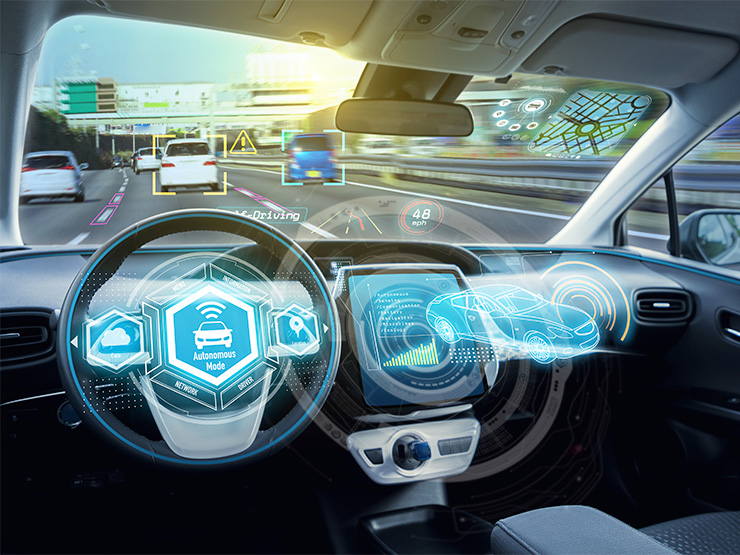
The road to fully autonomous vehicles is, however, fraught with challenges that span various domains, from technological hurdles to regulatory landscapes. The industry continues to grapple with these issues, striving to bring the autonomous driving experience to the mainstream.
Legal and regulatory hurdles
One of the most significant roadblocks for self-driving cars is the legal and regulatory framework. The pace of technological advancement often outstrips the ability of legislation to keep up, leading to a scenario where existing laws are inadequate or even obstructive. The requirement for a responsible human driver is deeply ingrained in vehicle regulations, and the shift towards autonomy necessitates a complete overhaul of these laws.
Insurance implications
The question of liability and insurance in the event of an accident involving a self-driving car remains unresolved. Determining fault and responsibility is complex when the driver is not a human but an algorithm. This uncertainty creates a challenging environment for investors and manufacturers, who seek stability and clear guidelines.
Industry standardization
A lack of industry standardization poses another challenge. Various companies are developing their autonomous driving technologies independently, leading to a fragmented landscape with no unified standards. This fragmentation could slow down the integration of self-driving cars into the broader transportation ecosystem.
Scepticism and social acceptability
Despite the potential benefits of self-driving cars, there is a degree of scepticism about their viability and safety. The social acceptability of autonomous vehicles is crucial for their adoption, and overcoming public apprehension is a significant challenge.
Technological limitations
The limitations of sensors and the need for new learning algorithms are some of the most vital technological challenges that self-driving cars face. Sensors must be able to accurately perceive and interpret the environment in all conditions, and learning algorithms need to be robust enough to handle the complexities of real-world driving.
The human factor
There are certain advantages that human drivers hold over autonomous systems, such as the ability to make nuanced decisions in unpredictable situations. Bridging the gap between human intuition and machine precision is a challenge that continues to be addressed.
The road ahead
Despite these challenges, the pursuit of self-driving technology is relentless. The benefits – increased safety, efficiency, and accessibility – are too significant to ignore. As we move through 2024, the industry is focused on overcoming these hurdles, with the goal of making autonomous vehicles a common sight on our roads.
The journey towards fully autonomous vehicles is complex and multifaceted, but the progress made thus far is undeniable. With continued innovation and collaboration, the future where self-driving cars are an integral part of our daily lives is within reach.
The current state of autonomy
The industry categorizes self-driving technology into levels, ranging from 0 (no automation) to 5 (full automation). Most mainstream carmakers have set their sights on Level 2 autonomy, which includes advanced driver assistance systems capable of taking over steering, acceleration, and braking functions. However, even at this level, the driver’s attention is indispensable.
Breakthroughs and setbacks
Mercedes Benz has made headlines with its Level 3 system for the 2024 S-Class and EQS Sedan models. This system allows for automated driving in specific conditions, marking a significant step towards higher autonomy.
On the other hand, the dream of Level 5 autonomy, where cars would drive themselves under all conditions, remains on the horizon. Companies like Tesla are pushing the envelope, aiming to bring fully autonomous vehicles to the market as soon as possible, leveraging their advanced Hardware 4 technology.
The off-road trailblazers
Interestingly, the off-road sector has witnessed a more rapid adoption of autonomous technology. In environments where conditions are hazardous and tasks fall under the “three Ds” – dangerous, dull, and difficult – autonomous vehicles have proven to be more efficient and safer than their human-operated counterparts.
The future is autonomous
Despite the challenges, the trajectory of self-driving cars is unmistakably forward. With each passing year, we witness advancements that bring us closer to a world where autonomous vehicles are the norm. The journey is long, and the destination is not yet in sight, but the wheels are in motion, and there’s no turning back.
© Concept Publishing CC 2024