
The current state of self-driving cars
The promise of fully autonomous vehicles has long captivated imaginations, offering a future of safer roads, less congestion, and newfound personal freedom.
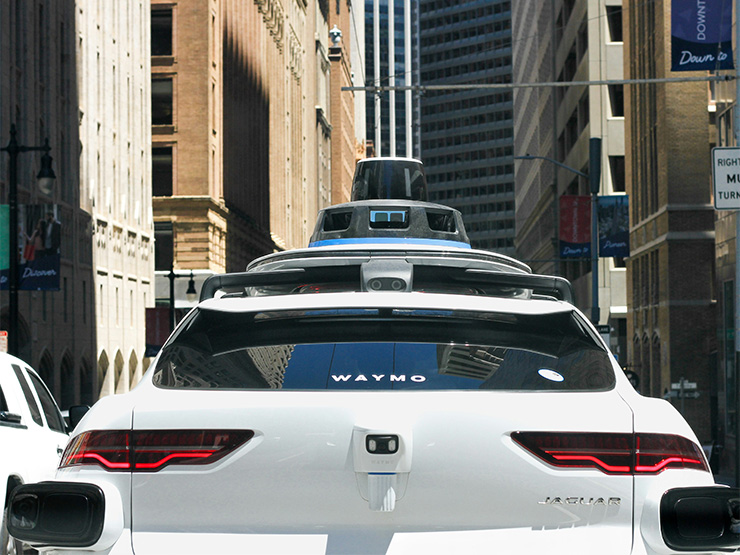
While the ultimate vision of a Level 5 self-driving car remains a dream rather than a reality, the industry has undeniably turned a corner. We are witnessing a rapid acceleration of technological advancements and the cautious but determined rollout of highly automated systems in specific use cases.
Levels of autonomy
To understand the current landscape, it’s important to differentiate between the levels of autonomous driving defined by the Society of Automotive Engineers (SAE):
- Level 0: No Automation – The human driver performs all driving tasks.
- Level 1: Driver Assistance – Features like adaptive cruise control assist with one driving aspect.
- Level 2: Partial Automation – The vehicle can manage both steering and acceleration/deceleration, but the human driver must remain engaged and supervise at all times (e.g., Tesla Autopilot, GM Super Cruise). This is where the majority of new cars on the road in 2025 fall, with some manufacturers continually enhancing these systems with over-the-air updates.
- Level 3: Conditional Automation – The vehicle can handle all driving tasks in specific scenarios, allowing the driver to divert attention, but requiring them to take over when prompted (e.g., Mercedes-Benz Drive Pilot in certain conditions). While legally permissible in some regions, widespread consumer adoption of Level 3 is still emerging due to regulatory complexities and driver trust.
- Level 4: High Automation – The vehicle is capable of performing all driving functions under specific, “geofenced” conditions, with no expectation for human intervention. This is where the most significant advancements and commercial deployments are occurring.
- Level 5: Full Automation – Complete autonomy in all conditions, with no human input needed at all. This “holy grail” remains a long-term goal, likely decades away from widespread availability.
Robotaxis and shuttles
The most visible manifestation of true self-driving technology is in Level 4 robotaxi and autonomous shuttle services. Companies like Waymo (Alphabet’s subsidiary) are operating fully driverless taxi services in geofenced areas of Phoenix and Los Angeles, with millions of rides provided monthly. Similarly, China’s Baidu (Apollo Go) and Alibaba’s AutoX, along with partners like WeRide and Pony.ai, are deploying large fleets of autonomous vehicles in numerous cities.
These deployments are often characterized by:
- Geofenced operations: Limited to specific, well-mapped areas where the technology has been extensively tested.
- Dedicated fleets: Purpose-built vehicles designed for autonomous operation, often without traditional controls.
- Remote monitoring: Human operators monitor multiple autonomous vehicles simultaneously, ready to intervene if necessary, providing a crucial safety net and regulatory compliance.
Beyond passenger transport, autonomous trucking is also gaining significant traction. Companies are pivoting towards this segment due to its simpler operating environment – primarily highways with more predictable conditions and fewer complex interactions – and clearer return on investment.
Technological prowess and persistent hurdles
The underlying technology powering these advancements is incredibly sophisticated. Artificial intelligence (AI) and machine learning are at the core, enabling vehicles to perceive their environment using a combination of sensors (LiDAR, radar, cameras, ultrasonics), plan routes, and make real-time driving decisions. High-definition mapping and V2X (Vehicle-to-Everything) communication are also vital, allowing vehicles to understand their precise location and communicate with infrastructure and other road users.
However, the road to widespread adoption is not without its significant challenges:
- Technical Limitations: Despite advancements, self-driving systems can still be confounded by unpredictable situations like severe weather (heavy rain, snow, fog), unusual road conditions (potholes, faded markings), and the unpredictable behaviour of human drivers and pedestrians.
- Regulatory Patchwork: A consistent global regulatory framework for autonomous vehicles is still evolving. While over 50 countries have introduced or are drafting AV legislation, a fragmented landscape of laws and liabilities creates hurdles for scaling operations across borders. South Africa, for instance, is in the early stages of developing its own regulatory framework, mirroring global trends but with local nuances regarding infrastructure and traffic conditions.
- Public Trust and Acceptance: High-profile incidents, even rare ones, can significantly erode public confidence in the safety and reliability of autonomous vehicles. Overcoming this requires transparent communication, proven safety records, and robust testing.
- Cost and Accessibility: The advanced sensor suites and computing power required for higher levels of autonomy remain expensive, making fully autonomous vehicles inaccessible for most private consumers. The current focus is on shared mobility services where the cost can be amortized across many users.
- Cybersecurity Risks: As vehicles become more connected, they become more vulnerable to cyberattacks, posing a significant threat to safety and data privacy.
- Ethical Dilemmas: Complex questions surrounding liability in the event of an accident and how autonomous vehicles should make life-or-death decisions continue to be debated.
The path forward
While Level 5 autonomy remains a distant dream, 2025 marks a definitive “breakout year” for Level 4 deployments in controlled environments. The industry is focusing on a “myriad of narrowly defined use-cases” rather than a blanket global rollout. Continuous investment in AI, sensor fusion, and robust testing methodologies will drive further improvements. As regulatory frameworks mature and public trust slowly builds, the footprint of self-driving cars will undoubtedly expand, reshaping urban planning, logistics, and our definition of transportation.
The information contained in this article is of a general nature and intended for information purposes only.
© Concept Publishing CC 2025