
Should you invest in cryptocurrency?
The price of bitcoin hit R974,000 ($66,000) in October, a massive 70-fold increase from the R14,000 it traded at in early 2017.
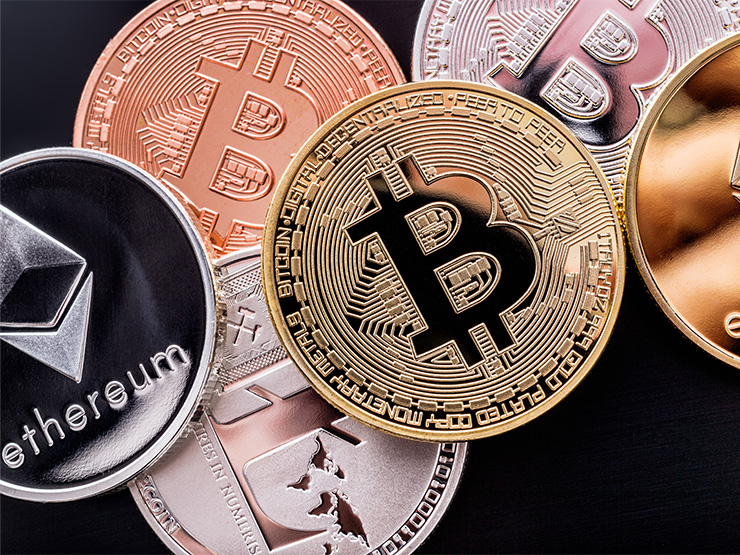
Some analysts are predicting $100,000 as the next price target. These predictions came on the back of the news that bitcoin ETFs (exchange traded funds) have been approved by US regulators. Bloomberg reports that the total value of all these digital currencies has swelled to more than US$2 trillion. Of these, bitcoin is the most popular, worth more than $1 trillion itself.
According to Ms Olaotse Matshane, Intergovernmental Fintech Working Group Chairperson, the crypto asset ecosystem has grown to include more than 10 000 unique crypto assets. Global daily trading values have also increased significantly over the past few years, currently averaging more than $200 billion, and on some days exceeding $400 billion. “While crypto assets’ viability as a widely used means of payment remains untested and an open question, the market has demonstrated significant resilience over the last decade, and the use cases for crypto assets as an alternative – albeit highly speculative and risky – investment class and as a cross-border remittance instrument, appear to be gaining some traction among retail customers,” says Matshane.
What are cryptocurrencies?
Cryptocurrencies are digital assets that operates like normal currency, but without the banks taking a cut with every transaction. Unlike normal currency, there is no physical version of the coin.
The Times explains that each coin is created (or mined) using an encrypted code, which is a string of numbers and letters. The same equation used to create the code can “unlock” it (like a virtual key).
Important points about bitcoin:
- Cryptocurrencies, like bitcoin, are a form of payment that uses blockchain technology to send data in cyberspace.
- Each bitcoin must be mined.
- It is finite: only 21 million bitcoins can be mined in total.
- Cryptocurrencies are “decentralised” meaning they are not regulated by a financial authority, like a government or central banks.
Cryptocurrencies vs shares
Investing in cryptocurrencies is not like conventional investing in the stock market. There are numerous differences between shares and cryptocurrencies, the most important being that a share is an ownership interest in a business (backed by the company’s assets and cash flow), whereas the value of a cryptocurrency in most cases is based purely on speculation. This means that the value of a cryptocurrency is driven by the belief that someone will purchase it for a higher value in the future, while the value of a share over the long term is driven by the performance of the underlying company.
Shane Woldendorp, a member of Orbis’ team of Investment Counsellors, explains that the price that you pay for any asset is what really matters over the long term for an investor, and has also proven to be a reliable indicator for future returns. “But how should you, as an investor, attempt to estimate what something such as bitcoin is really worth? Options typically include a discounted cash flow method or a sum-of-the-parts/asset-based approach. Unfortunately, given cryptocurrencies don’t pay any cash flows or own any tangible assets, both approaches are not very helpful. Historical prices are also not useful, given many cryptocurrencies are new and the first bitcoin was only traded in 2009. As a result, this makes cryptocurrencies difficult to value and therefore prone to speculation,” says Woldendorp.
Regulatory risks of cryptocurrency
China announced in September that all cryptocurrency transactions in the country are illegal. In the U.S., Federal Reserve Chair Jerome Powell recently said that he has no intention of banning cryptocurrency while Security and Exchange Commission Chairman Gary Gensler has consistently commented on both his own agency’s, and the Commodity Futures Trading Commission’s, role in policing the industry. Gensler has also said that investors are “likely to get hurt” if stricter regulation is not introduced.
In South Africa, The Crypto Assets Regulatory (CAR) Working Group (WG) of the Intergovernmental Fintech Working Group (IFWG) agrees that crypto assets cannot remain outside of the South African regulatory purview and recommends that South Africa employs a staged approach to bring crypto assets within the regulatory remit through the regulation of crypto asset service providers (CASPs).
Many international agencies have expressed the sentiment that banning crypto asset-related activity could drive these activities underground, with little or no regulatory oversight. South Africa similarly aims to mitigate the risks posed by crypto assets around money laundering, the financing of terrorism and consumer protection, while not shutting out the potential benefits such financial innovations can bring.
An important question that investors should ask themselves, is how their financial position will be affected if developed economies decide to follow China’s example and ban cryptocurrencies as a form of payment.
The Times offers several questions you should ask yourself before deciding to invest in cryptocurrencies:
- Do I understand what I am investing in?
- Am I happy with the level of risk?
- How much more expensive is it now compared to a few months ago? If so, why am I wanting to buy a thing because its price is higher? Where else in my life do I do that?
- Is there any evidence to suggest prices could rise even higher?
- If I buy it now with a view to sell it for even more later, who do I think will buy it from me for that higher price and why?
- If an asset is so great, why was I not interested when it was much cheaper?
- Have I convinced myself that I am in some way “in the know?”
As with any other investment decision, it is important to consult your financial adviser prior to deciding on a course of action.
The information contained in this article is of a general nature and intended for information purposes only. It is neither to be construed as financial advice nor to be regarded as a definitive analysis of any financial, legal or other issue. Individuals must not rely on this information to make a financial or investment decision. Before making any decision, we recommend you consult your financial planner/adviser to take into account your particular investment objectives, financial situation and individual needs.
© Concept Publishing CC 2021