
Introduction to scuba diving
An acronym for ‘self-contained underwater breathing apparatus’, scuba diving is a relaxing and educational outdoor activity that allows interested individuals to be close to various forms of marine life, with each dive having something unusual to offer.
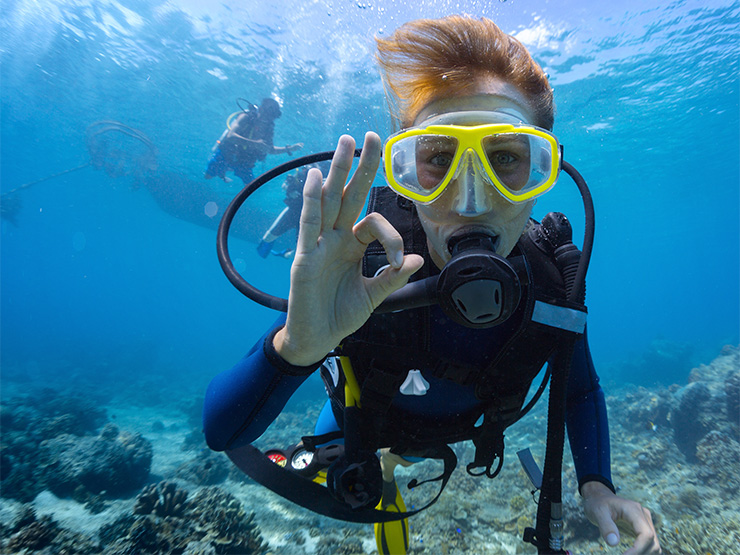
Diving in South Africa is of a high standard, and all major organisations’ qualifications are recognised (PADI, NAUI, etc.). It is mandatory for anyone diving to have completed a certified training course. There are dive schools in almost every city in South Africa, even inland, providing all the training and equipment you need. According to Ettienne Raal, owner of Alpha Dive Centre in Strand, a qualified instructor can teach you to dive in as little as five days. The academic sessions of the Scuba Diver Course include physics, physiology and medical aspects as they relate to a diver’s performance and safety in the water. Diving equipment, safety, dive planning and activities and navigation, are also addressed, and attention is given to the effect of the diver on the environment.
Then comes the fun bit: getting into the pool for some practical exercises. You’ll do some more practical exercises in the ocean before exploring the beauty and wonder of the underwater world. The course provides you with all the basic skills, without necessarily making you a competent diver. “We believe a diver is only competent once he or she has completed the Advanced Diver Course,” says Raal. This course trains you to become a more independent and confident diver. However, a medical examination or an updated medical within the previous twelve months is required before any water session.
Once qualified, you will have two options regarding further costs associated with your new hobby: buy or rent. Ettienne strongly recommends that you acquire your own snorkel, mask, fins and booties.
It is critical to understand that, once below the surface, you are literally relying on your equipment to keep you alive. Always ensure that all equipment has been serviced and is in good working order. Refer to your checklist both before and after the dive, to make sure you have the necessary equipment and haven’t lost anything. This will typically include: gear bag, mask, snorkel and keeper, fins, booties, gloves and hooded wetsuit, weights and weight belt, buoyancy compensator device, regulator and alternate/secondary regulator, air tank, alternate air source, dive knife, dive light, dive flag, underwater camera, dive watch and dive computer.
South Africa has a variety of dive sites, ranging from the icy kelp forests off Cape Town to the tropical coral reefs off Sodwana Bay, and even a few thrilling inland dives. Cape Town is a great diving destination, offering excellent wreck, seal and kelp dives. There are no tropical fish, but the invertebrate life is more colourful and varied than that found on coral reefs. The Overberg is a little warmer than Cape Town, with the invertebrate life every bit as interesting. The main diving areas along the Garden Route are similar to those of Cape Town and the Overberg, except that there is no kelp. Although the Eastern Cape is not tropical, you can sometimes find tropical species in the warm, clear water.
In June and July, divers descend on the Wild Coast and follow the “greatest shoal on earth” ̶ the sardine run ̶ out into the deep. Aliwal Shoal, Landers Reef and Protea Banks, the main dive sites of the KZN South Coast, are coral-encrusted rock reefs, and the Shoal, selected as one of the top ten dive sites in the world, offers almost anything a diver can wish for. Diving at the North Coast is similar to that at the South Coast and Sodwana Bay, the country’s most popular dive destination and home to some of the most southerly coral reefs in the world. The bay is situated in a marine reserve that now forms part of the World Heritage-classified Greater St Lucia Wetlands Park.
South Africa is home to many dive resorts, some of which also offer underwater safaris, shark cage diving, and turtle-viewing expeditions, so add scuba diving to your hobbies to ensure you do not miss out on these wonderful underwater adventures.
The information contained in this article is of a general nature and intended for information purposes only.