
Growing and caring for orchids
The endless variations in colour, shapes and sizes, along with their longevity, contribute to these spectacular beauties’ popularity as decorative plants.
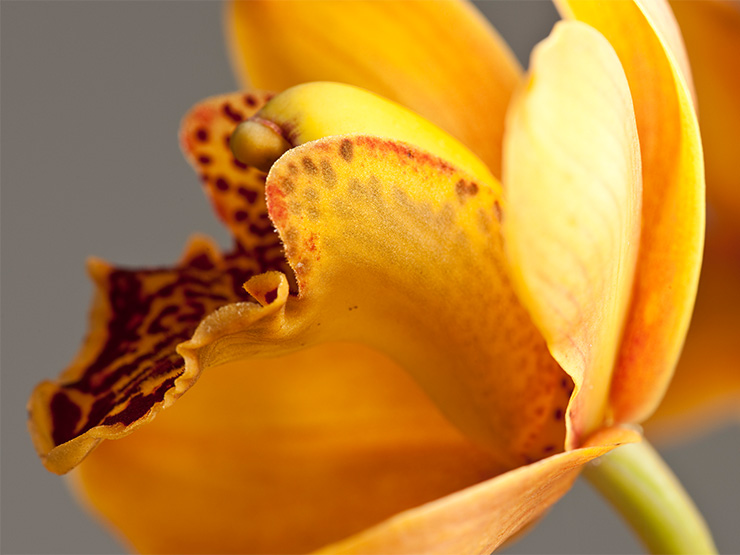
Many regions in South Africa have a climate that is ideal for the majority of orchid species to grow and flourish. With more than 20 000 species worldwide, orchids represent one of the largest families of flowering plants. Though they can be found throughout the world, most specimens grow in the tropics and subtropical regions. Southern Africa has almost 500 indigenous orchid species, of which 65% are endemic to the region.
Water, temperature, light, air, humidity, fertiliser and re-potting are essential components of an orchid care programme. Because different types of orchids require different amounts of these elements, it is important to familiarise yourself with the needs of the variety of orchid you have acquired.
Water
A common mistake in orchid care is over-watering. While most orchids prefer a humid environment, too much water may cause them to die. www.everything-orchids.com provides the following tips for watering:
- If you are not sure whether the plant is dry enough, wait another day before watering.
- Pour water into the pot until water seeps from the drainage holes ‒ this encourages your plant to grow deep roots and flushes out excess fertiliser.
- Watering your orchids in the morning allows the leaves and crown to dry before nightfall, preventing rot.
Water more often when:
- the plant is actively growing
- there is strong wind/air movement
- the temperature is warmer and
- the humidity is lower.
Orchids with pseudo bulbs (a large thickening at the base of the stem that stores water and nutrients) usually require drying out before watering, while orchids with no pseudo bulbs require a moist state.
Temperature
Orchids’ temperature preferences depend on their place of origin and vary from cool to warm. While most orchid species are fairly tolerant of different daytime temperatures, a difference between daytime and night-time temperatures is vital. Most orchids require a night-time temperature of between 12°C and 9°C cooler than the daytime temperature in order to flower. This explains why orchids grow poorly in an enclosed environment like an office building with a regulated, consistent temperature.
Light
The correct light is essential for growing orchids ‒ even with the correct temperature, water and fertiliser ‒ your orchids will not bloom without it. Light requirements of different orchid types are categorised as low, medium and high. Lush, dark green or elongated leaves probably mean your orchid is not receiving enough light, while too much light can burn your orchid. Both the intensity and the duration of light are crucial. Orchids should have six to ten hours of light at the desired intensity per day.
Air
Air movement serves three primary purposes in promoting orchid health, so make sure there is ample circulation around your plants.
- Circulation has a cooling effect.
- It keeps the prevailing temperature more uniform.
- Moving air prevents the germination and multiplication of fungi and bacteria on wet surfaces.
Humidity
The lower the humidity, the more water orchids lose. As a general rule, the humidity should be at least 40% during the day and 60% at night. A simple hygrometer will be sufficient to monitor the humidity in your growing area. The following tips will assist in meeting your plants’ humidity requirements:
- Place the plants on a humidity tray (available from nurseries) or a tray filled with pebbles. Pour water over the pebbles but do not cover them completely.
- Mist your plant several times a day during dry weather.
- If you have an elevated outdoor growing area or greenhouse, wet the ground under the plants.
- If you have a confined growing area, use a humidifier.
Fertilising
Experts recommend the weekly use of any balanced pot-plant fertiliser, like 18-18-18. A fertiliser containing higher levels of nitrogen (30-10-10) can be used in the growing season (spring and summer). Fertilisers specifically for orchids are available from most nurseries.
Re-potting
Orchids should be re-potted every two years. When the plant outgrows its pot or the potting medium breaks down, it is time to re-pot. The best time for re-potting is just after flowering when the new roots start to develop.
Basic orchid care is not much different from caring for any other plant. Orchids need light, water and food as well as a proper container with adequate room for root development. A good regime of watering and fertilising will ensure your enjoyment of these beautiful plants for many years.
The information contained in this article is of a general nature and intended for information purposes only.
Copyright Concept Publishing CC 2022