
Going organic
How easy is it to live an organic lifestyle – and more importantly, is it difficult to grow your own organic fresh produce?
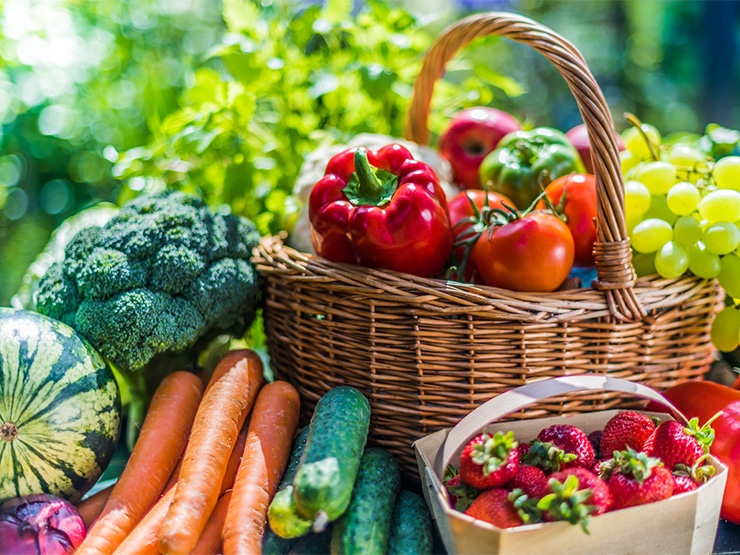
Contrary to many perceptions, you don’t need a lot of space, or much technical know-how, to grow your own organic produce. You can start with a couple of pots of herbs on your kitchen windowsill and progress to a full organic vegetable garden, which can be achieved with a piece of ground as small as two metres by one metre.
First, you need to understand what is meant by ‘organic’ when it comes to fruit and vegetables. Organic foods are grown without the use of conventional pesticides, artificial fertilisers, or sewage sludge, and are not processed with ionising radiation or food additives. When it comes to meat, organically raised livestock are reared without the routine use of antibiotics or growth hormones. Organic produce can not be genetically modified, and organic farming methods work at sustaining the ecosystems around the land, contributing to the long-term well-being of the environment.
These are all big concepts for someone wanting to start a home vegetable garden, so it’s best to start with a few basic principles that will keep you on the organic path, without having to worry about the big, chemical issues.
The first, and possibly most important rule about ‘going organic’ is to plant vegetables that will grow in that particular season – so, if for example, you’re going through winter, don’t plant things that are susceptible to the frost, such as tomatoes or other soft fruits – rather look to the hardier plants like butternuts and gemsquash for the colder months.
You don’t have to have a big garden to grow vegetables – although there’s no denying that it helps! If you have a patio, or even a sunny windowsill, you can grow several vegetables in pots – rocket, lettuce and a wide variety of herbs are very happy in pots, for example, and tomatoes and beans can be grown with the help of a small trellis rising out of a pot.
A compost heap can be the source of good, rich organic matter in which to grow your vegetables. Peelings from the kitchen and cuttings and clippings from the garden can be thrown here, and you’ll have good, rich compost in as little as four months. A wormery is another easy option to create your own natural fertiliser, and is far less work than it sounds – and herbs such as comfrey can be brewed into a nutritious fertilising tea.
Insects are the bane of any gardener’s life, but it is the control of these pests that is one of the key elements of ensuring that your produce is organic. There is a variety of non-chemical pesticides that you can make yourself from everyday household goods like salt, dishwashing liquid and vinegar, but organic farmers appreciate that every part of nature has its place, and tend to adopt an approach of prevention rather than cure, as pesticides tend to kill off the good guys – such as butterflies and bees – as much as they kill off the bad guys.
Companion planting is possibly the best way of controlling pests in your garden, and entails planting species that are natural pesticides alongside your vegetables – pesky insects are repelled from the site before they have a chance to take a bite. Some of the best natural pest repellants are marigolds, and lavender, and mint is particularly unpopular with ants. Basil is good for repelling flies and mosquitoes, so would be great in a pot on your patio when you’re eating al fresco with friends.
Apart from acting as pesticides, some plants thrive in one another’s company. They don’t only taste good together – tomato and basil thrive if grown together and lettuce loves growing alongside onions. Radishes have a lot of friends – they encourage beetroot, spinach, carrots and parsnips.
Your local nursery will have seedlings of in-season vegetables to start you off – or you could really get back to basics, and germinate your own seed.
The information contained in this article is of a general nature and intended for information purposes only.
© Concept Publishing CC 2022