
The concept of individually owned cars will soon be obsolete, and the internal combustion engine will cease to be competitive.
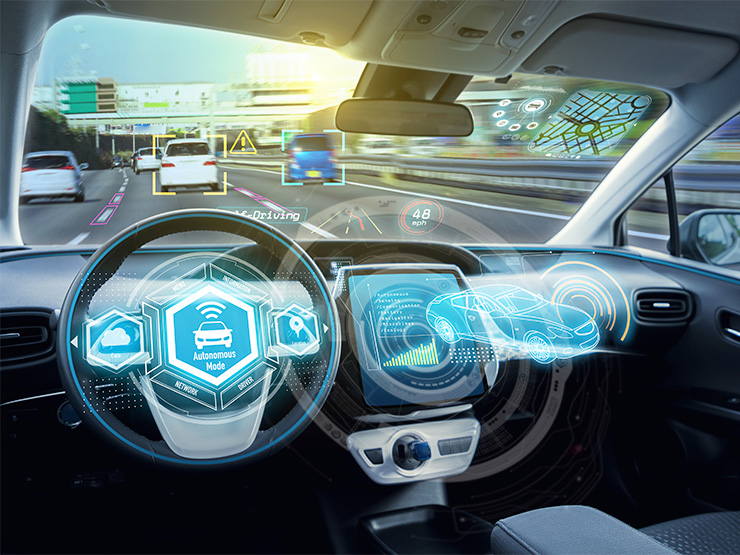
Car dealerships will cease to exist, and, by 2030, 95% of US auto miles will be travelled by autonomous, on-demand electric vehicles. These are some of the dramatic predictions made in a report by San Francisco-based think tank RethinkX, called Rethinking Transportation 2020-2030: The Disruption of Transportation and the Collapse of the Internal-Combustion Vehicle and Oil Industries, contradicting expectations that the transition to self-driving cars will happen over a number of decades. RethinkX believes the accelerated adoption curve of autonomous cars will be driven largely by market forces. The report states that “self-driving electric car share plans” in which consumers “subscribe” to a self-driving service, much like they subscribe to a cellphone contract, will be cheaper and more convenient for many people than owning a vehicle. As a result, the authors believe industries like oil, motor vehicle manufacturing, insurance, and transportation will face a mass migration away from their traditional products and services. The predicted change of business model from private ownership to transport-as-a-service has the potential to revolutionise the motor vehicle industry. The authors’ conclusions regarding the timing of the motor vehicle industry overhaul is dependent on the belief that fully autonomous (Level 5 or “wheel optional”) driving will be available by the early 2020s. According to Elon Musk, South African-born CEO and product architect of electric vehicle manufacturer Tesla Motors, this functionality will soon be available in the company’s cars. RethinkX’s findings are based on the growth of data from partially self-driving cars currently being developed. “Companies are investing billions of dollars in making this happen. All you need is one operating system to work, and then you have Level 5 autonomy. And the US-centred view — if it doesn’t happen there, it doesn’t happen anywhere — is a little misguided. A lot of these technologies are global. The Chinese are working on self-driving, and Europe is working on self-driving. And the first one to get it is going to be the Android or iOS of Level 5 autonomy,” the authors said. Moody’s, on the other hand, stated in their self-driving car study for the insurance industry that, while self-driving cars will likely force auto insurers to rethink their business models, widespread adoption of this technology is decades away, allowing insurers ample time to adapt.